NAMELESS @ 25: COMFORTABLE IN THE CIRCUS
The most respected man in Kenyan music. But what's his impact been? The industry still looks remarkably similar to the one he joined 25 years ago.
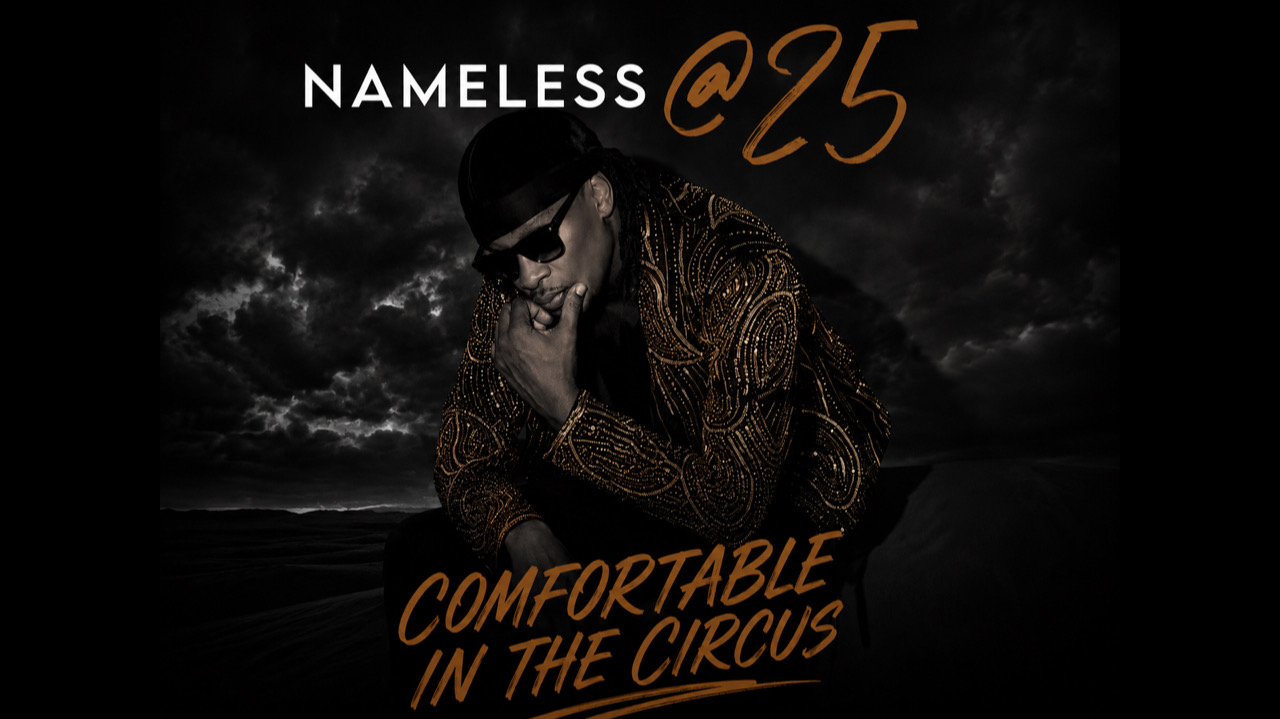
25 years.
25 years of David Mathenge AKA Nameless making music, selling shows, collecting awards, surviving musical eras and, perhaps most impressively, surviving the Kenyan entertainment industry itself
In Kenya, longevity is often treated as evidence of greatness. And to be fair, twenty five years is an extraordinary achievement. So when Nameless recently celebrated 25 years in music, the industry did what it does best when one of its veterans reaches a milestone. He was applauded. There was nostalgia. There were old songs. There were memories. There were photographs of a younger Kenya. There was the obligatory declaration that a legend had been honoured. Lazima msanii asifiwe.
And perhaps he deserves all of it. But there is a problem with flowers. They are very useful for covering things. Because after 25 years, perhaps the more interesting question isn't whether Nameless deserves to be called a legend. Its what exactly does the legend leave behind? Not the songs. We know about the songs. Going from a Megarider to Holidays where you Sinzia is a lot of peoples lifestory as well. This is not about the awards, the longevity etc. 25 years has already established that.
The question is what happened to the industry because Nameless was in it for 25 years. What did he build? What did he change? What did he protect? Who came after him and found the road easier because he had walked it first? Those are considerably less comfortable questions. And perhaps they are the questions that should accompany a 25th anniversary. Because there is a difference between having a great career and leaving behind a great legacy.
THE FLOWERS FIRST BECAUSE....RESPECT YOUR ELDERS
Let's get something out of the way. Nameless is a significant figure in Kenyan popular music. He was part of the generation that helped establish Kenyan music as a serious commercial proposition.
The Ogopa/Calif era mattered. Prezzo's investment in the videos mattered. The collaborations mattered. The emergence of Kenyan pop music as something capable of competing for attention with foreign music mattered. The Nigerians came and took our sound but thats a story for another day.
Nameless was one of the most recognisable faces of that transition. He also achieved something rare. He remained relevant. He maintained a relatively clean public image. The corporate darling. He built a beautiful family. He survived tech revolutions, changing tastes, collapsing record structures, the death of traditional music television, the rise of streaming and the social media era. He didn't need a new scandal every six months to stay famous or manufactured beef to stay interesting. He made music. People liked it. He kept going. YAY!
That however is a career achievement. Its not the same as institutional legacy.
THE MACHINE THAT NEVER GOT BUILT
Now for the uncomfortable. Nameless came from a generation that had enormous cultural capital. Songs, audience, music video culture, regional recognition. They had the beginnings of a professional music business. But what did they build around it?
Where are the publishing companies, the catalogue businesses, the artist development institutions, the touring IP’s, the archives, the serious investment vehicles? Where are the systems that take the knowledge accumulated over 25 years and transfer it to the next generation? We have the memories, the playlists, the nostalgia and now the anniversaries but we don’t have the machinery.
In Nameless' case particularly, this is very interesting because he wasn't simply an artist standing outside the industry's institutional problems. At one point, he was a director of the Performers Rights Society of Kenya — PRISK.
PRISK exists within the ecosystem responsible for performers' rights and royalties. So Nameless had something most artists never get which is institutional proximity. He had been inside the machinery. Which begs the question What did he do with that access?
“There is a difference between having a great career and leaving behind a great legacy.”
Author
THE CONTRADICTION
Kenyan entertainment has perfected a strange formula. We create, celebrate and exploit artists. We complain that artists don't understand business. Then we complain that artists don't invest in the industry. Then we complain that investors don't invest in artists. Then we complain that investors don't understand artists. Then the artist complains about the investor. The investor complains about the artist. The CMO complains about everyone. Eveyone complains about the CMO. Everyone goes on Twitter/IG. And eventually another genre arrives.
This industry is a matatu stage where everyone is a conductor with microphones shouting. No one is actually driving the mathree. And the most damaging consequence is that serious capital becomes nervous.
Capital needs predictability, contracts, rights, accounting, recoupment and dispute resolution. It needs to know that if it puts money into an artist, the money won't disappear because somebody with a bigger name decided they didn't like the investor.
Which brings us to a story that deserves to be told.
THE INVESTOR
At the very beginning of the COVID-19 pandemic, an investment consortium of Kenyans in the diaspora called The Curators Collective had committed approximately KSh 10 million through a Kenyan entertainment company to build capacity, systems and infrastructure around artist development. Beneficiaries included Ethic, Ochungulo Family, Tunji, Triomio, Rosa, Lucid, Croco & Guga, Shari Afrika and The Late just Imagine Africa.
This wasn't a vanity investment. It wasn't somebody throwing money at celebritys to look cool, they could care less, or as in other markets, trying to clean their money. It was intentional hard working Kenyans believing in and choosing to back their homegrown artists. The objective was to create infrastructure around emerging Kenyan artists and this was happening at the time the convenor of the investment consortium had shown enough proof of concept with his own personal backing of the gengetone movement which had exploded.
For perhaps the first time in years, Kenya had a youth driven sound with genuine cultural momentum that wasn't being imported from Lagos or reverse engineered from Johannesburg. It was coming from young Kenyans in Eastlands estates. From matatus. From YouTube. From WhatsApp. From teenagers and young adults with microphones and very little respect for the conventions of the existing industry. The above artists and so many more.
There was a moment when the possibility existed that this wasn't simply a genre and could become an ecosystem. But ecosystems need capital. So someone put money behind it.
THEN CAME THE DISPUTE (NA IWAKE....LITERALLY)
One of the projects the consortium had backed involved Ochungulo Family's ‘Na Iwake. Remix’ featuring The Kansoul. A dispute subsequently emerged over monies owed to the investor and publishing royalty income associated with the work. This is hardly an unusual story in African music. In fact, it is practically the industry’s national sport.
Everybody has a different understanding of what was agreed. The artist says one thing. The investor says another. The publisher has a completely different spreadsheet. Someone suddenly discovers an old WhatsApp message. Somebody's cousin remembers a conversation from six years ago. And eventually everybody discovers that nobody properly documented anything.
But despite the dispute, the lead investor continued trying to create commercial opportunities for the artists. Following the release of ‘Bandana Ya E-Sir,’ which featured Ochungulo Family members Nelly The Goon, Dmore, Nameless, Habib and Triomio, a performance opportunity was secured. The investor's intention was to recover part of the outstanding money owed to the consortium from a portion of the performance fee.
In other words: Capital had gone in, revenue was being generated, there was an attempt to recoup. It was a normal commercial proposition. Then things became considerably less normal
“I will show you what I can do to you. You will never do another show here.”
Nameless
ENTER NAMELESS - THE HOT STEPPER
Nameless whose own money had been affected by this recoupment, began actively discrediting the investor's credibility as a promoter and investor in the arts. Now, for the record, there is nothing inherently wrong with disagreeing with an investor, defending an artist or having an opinion about another promoter.
But influence is power. And Nameless has a lot of it. He’s not an unknown blogger with a random Twitter account. He was and still is one of the most recognisable and respected artists in the country. His opinions carry weight. His relationships carry weight. His cultural capital carry weight.
And the investor could honestly have done a better job explaining the situation. But cool heads were not prevailing in the middle of the pandemic
During the confrontation regarding the monies recouped, Nameless said: "I will show you what I can do to you. You will never do another show."
Let that marinate.
This stopped being merely an argument between two adults. It was a statement about power and rank. It was an established cultural figure telling someone who was sourcing and putting capital into the industry that access to the industry could be taken away if he says so. And that is precisely the kind of informal power we rarely discuss in African entertainment but know it when we see it.
We should ask the question; Who can make investors think twice before putting another shilling into Kenyan music and arts? Questions about who can close doors, make phone calls, make a promoter toxic, influence artists, all these are forms of power too. They just don't appear on a Company's CR12.
A person that wields this sort of power is the embodiement of what people in the industry call a Gatekeeper. Willingly or unwillingly, and it is not inherently a bad thing.
THEN THE CAPITAL LEFT
Eventually; with all that came with covid being a factor as well; the investment consortium withdrew. And that decision had consequences beyond one disagreement. The infrastructure being built around the artists collapsed. The investment supporting the ecosystem disappeared. Affecting varying players in the creative sector directly and indirectly
To be clear, nobody can claim that one person single handedly killed Gengetone. That’s petty. The genre had internal problems. Artist management and development structures were weak. Publishing disputes were everywhere. The pandemic devastated live entertainment. The music business was undergoing a technological transition. Artists were fighting amongst themselves. Consumer tastes were changing. Every emerging genre eventually evolves. All those things matter.
But what happens when one of the few pools of serious capital supporting an emerging cultural movement walks away? That's the uncomfortable question.
Capital doesn't simply buy songs. It buys time, marketing, management, studio sessions, content, lawyers, distribution, relationships and most importantly gives artists the ability to experiment and to make mistakes without immediately starving. Remove that capital and the ecosystem becomes much more fragile. And that is what happened. The investment was withdrawn. The infrastructure disappeared. The momentum fractured and the broader Gengetone ecosystem began to lose its position at the centre of Kenyan youth culture.
Eventually, the industry moved on. Arbantone emerged. The market found another sound. That's how culture works. But the fact that another genre emerged doesn't mean nothing was lost. Would Gengetone have lasted forever? I guess we’ll never know. The more important question is What might it have become if the infrastructure around it had survived? That’s the cruel thing about cultural history. You can measure what happened but you cannot measure the opportunities that disappeared.
THE ARTISTS DIDN'T EVEN KNOW THE WHOLE STORY
Perhaps the most revealing detail is that the artists themselves were not fully aware of the scale of investment being deployed around them. And this is where Kenya's entertainment problem becomes bigger than Nameless.
We constantly tell young artists to learn the business, own your masters. Understand publishing. Negotiate your contracts. Don't let people exploit you.
Excellent.
But who is teaching them? Who is explaining recoupment, investment, the difference between ownership and publishing, performance income, master income, who is explaining why an investor might be entitled to recover money before everyone begins dividing profit? Who is teaching them how to read a royalty statement?
We can acknowledge what Muthoni DQ is doing with her Perform incubator as well as the work of Sol Generation but we don't have enough of that. Also, those 2 examples quickly morph into systems with a lot of the same issues that affect the industry as a whole. Where tearing down your perceived competition is seen to be a means to their own survival.
So instead we have artists, investors, promoters and publishers entering relationships with completely different understandings of what they are doing. Then everyone gets angry. Then somebody gets labelled a thief, a conman, a liar, a parasite. Then the lawyers get involved. Then the music dies.
And then we call it ‘industry politics.’ We say 'charge it to the game'. And the money moves to South Africa or elsewhere where the ROI is cleaner and better understood.
THE PRISK CONTRADICTION
Why does Nameless' history with PRISK matter?
If you are simply an artist, then perhaps the responsibility ends with your music. But once you occupy positions of institutional influence, the standard changes. Nameless had been close enough to the performers' rights machinery to understand the structural problems affecting artists. He knew the ecosystem wasn't working perfectly; He knew royalties were complicated; He knew artists were vulnerable; He knew relationships between artists, promoters, publishers and investors could become combustible. And yet, when a dispute involving an investor and artists escalated, his decision to teach what he thought was a lesson to just a rogue promoter, contributed to the investment consortium walking away from the ecosystem.
That’s a serious contradiction. Not proof of criminality or of corruption. Not proof that Nameless intended to “destroy Gengetone” But a contradiction worth speaking on because if you understand how fragile an industry is, you should understand what happens when you push capital out of it. And if you have influence over artists, you have to understand that influence can be used constructively or destructively.
'LEGEEEEND' ? - TOO EASY
The problem with calling everyone a legend is that the word becomes meaningless. A legend shouldn't simply be someone who was famous for a long time. A legend should be someone whose existence fundamentally changed the trajectory of the thing they were part of. There are artists around Africa who did more than release music.
They built labels, publishing businesses, built festivals, management companies, academies, media, fashion businesses, technology, created investment vehicles, turned cultural influence into infrastructure, became platforms through which other people became successful.
That's the institutional legacy that Kenya lacks. We have an enormous number of famous people and remarkably few institutions named after their impact
THE CATALOGUE PROBLEM
Lets take Nameless' own catalogue as an example.
His old music is finding new audiences. Songs created decades ago are being rediscovered by people who weren't even the original demographic. And that's a massive commercial opportunity.
A catalogue like that can become a: Touring IP, festival, documentary, licensing business, publishing operation, sync library, mentorship platform, cultural archive, merchandise brand, music education project and a generational bridge.
Instead, much of the value remains locked inside nostalgia. And then we congratulate Gen Z for discovering old Kenyan music. Why did they have to discover it and it wasn't deliberately handed down? Why isn't there a functioning Kenyan music archive? Why isn't Kenyan musical history packaged as intellectual property? Why does TikTok have to become our national archivist? Our most valuable IP is held by white owned South African companies. The fucking irony.
This is obviously bigger than Nameless. But Nameless is a perfect case study because he has been around long enough to know exactly what the industry has failed to build and he is complicit in its lack of consequential growth. As are so many other industry players. That is a fair indictment.
THE REAL FAILURE
The real failure isn't CMO’s or that Nameless didn't create a publishing company. Artists are not obligated to become entrepreneurs. The real failure is that Kenya has spent 25 years celebrating individual success without building collective infrastructure. And people who have acquired enormous cultural capital become part of that story whether they like it or not.
At some point, influence creates responsibility. Not legal or contractual responsibility. Cultural responsibility. If your voice can move people, your call can open a door, your opinion can determine whether someone gets a show, you can influence whether artists trust an investor, whether investors trust an artist, you have power. And power should be interrogated.
Especially when the person wielding it has spent 25 years being celebrated as a pillar of the industry.
THIS ISN'T ABOUT WHETHER NAMELESS IS A GOOD PERSON
That convo is irrelevant. Maybe he is. Maybe he isn't. That's for the people who know him personally. This is about an industry and industries are not judged by whether their stars are nice people. They are judged by outcomes.
Are the CMO’s in check? Are artists earning? Are rights protected? Are publishing systems functional? Can investors recoup? Can promoters survive? Are catalogues getting monetised to their utmost potential? Are young artists building sustainable careers? Does capital trust the ecosystem? Are institutions stronger than they were 25 years ago?
That's the scoreboard. And the scoreboard is not flattering. Its as consequential as celebrating the opening of a bridge in 2026.
SO WHAT DID 25 YEARS ACTUALLY CHANGE?
Nameless proved that a Kenyan artist could pick to have a 25 year career over being a full time architect. Cool. But did he prove that a Kenyan artist could use 25 years of accumulated cultural capital to transform the business around him?
Did the Kenyan music industry become more investable? Did artist development become more sophisticated? Did publishing become more transparent? Did the next generation inherit better infrastructure? Did young artists gain stronger negotiating power? Did the people who came after him have a better road because of him? Or did they simply inherit the same potholes with newer tyres? Because that is the uncomfortable reality.
The Kenyan music industry still struggles with royalties, publishing, contracts, catalogue ownership, artist management, attracting serious capital, building sustainable event businesses and turning cultural moments into durable institutions.
TWENTY FIVE years.
And we are still having the same arguments.
THE CIRCUS
Nameless has mastered the circus. He knows how it works. He knows the performers, promoters, investors, media, corporate brands, audience, politics and the different gatekeepers.
He knows how to survive. But there's a difference between learning how to survive a broken system and deciding to break the system. The first makes you successful. The second makes you consequential. And after 25 years, perhaps Kenya should demand more from the people it calls legends.
Not more hits, concerts or nostalgia. More consequences, institutions, infrastructure and uncomfortable convos. More people willing to protect the ecosystem even when it costs them relationships. More people willing to make the industry investable. More people willing to leave more than just a spotify link and Youtube channel.
SWALA LA KIZUSHI
Nameless deserves his flowers.... But flowers are temporary. The stage comes down. The lights go off. The crowd goes home. The nostalgia fades and eventually, every artist has to confront the same question:
What remains when the music stops? ….That's the real recon, not just chumz.
For Nameless, the music will remain. No doubt. The songs are embedded in Kenyan cultural memory. I write this listening to and wondering how this man managed to make Sinzia part 2 so relevant to this generation. The talent is undeniable but the institutional legacy is much harder to locate.
And perhaps the most uncomfortable part of that question is not what Nameless built. It’s what happened when somebody else tried to build. An investor put approximately KSh 10 million into an emerging generation of Kenyan artists during one of the country's darkest economic periods. Capital went into artist development. Infrastructure was being built. A young cultural movement had commercial momentum. Then came disputes over money and publishing. Then came a confrontation. Then came an alleged campaign to discredit investors.
Then came the words: ‘I will show you what I can do to you. You will never do another show here.’
Then the investment was withdrawn. And the infrastructure collapsed. The artists moved on. The industry moved on. Another genre eventually took the cultural space Gengetone had occupied. And Kenya continued doing what Kenya does best. Finding another set of artists to celebrate. Another sound. Another movement. Another crop of young people to tell ‘Don't make the mistakes of the people before you.’ Without ever fixing the system that made those mistakes inevitable. That’s the real tragedy. Not that Nameless didn't build enough. Not that some unknown investors lost an investment. Not even that Gengetone faded. The tragedy is that Kenya had a moment when culture, youth, technology and capital collided and we still couldn't build the infrastructure to sustain it.
So yes. Celebrate Nameless at 25. Play the songs. Tell the stories. Let the nostalgia wash over everybody. But if we are going to call someone a legend, we should be brave enough to ask what the word actually means. Because being in the circus for 25 years is impressive. Knowing how to perform in the circus is impressive. Selling out the circus is impressive. But eventually somebody has to ask What is different because he was here?
A long career is an achievement. A transformed industry is a legacy.They are not the same.
If Kenya can sell out a 25 year celebration for an artist, why can’t Kenya build an industry around the economic value that artist represents?
Congratulations Monski.
Cheers to another and hopefully different kind of 25.
No corrections have been issued on this story. When we get something wrong we say so here, with the date and what changed. Read our editorial standards.